Sep 15,2026
The primary storage difference between Dehydrated Carrot and freeze-dried carrot lies in moisture content, packaging sensitivity, and long-term stability. Freeze-dried carrot typically requires more airtight and moisture-proof storage due to its extremely porous structure, while dehydrated carrot is slightly more tolerant to minor humidity exposure but still requires dry, sealed conditions for optimal shelf life.
In general, freeze-dried carrot can achieve a shelf life of up to 20–25 years under ideal storage conditions, while dehydrated carrot usually ranges from 12–24 months to 5 years depending on packaging quality and humidity control.
Moisture Sensitivity and Storage Stability
Moisture is the most critical factor affecting the storage stability of both products. Dehydrated Carrot retains a small percentage of moisture (typically 5–10%), while freeze-dried carrot contains almost no moisture (around 1–3%).
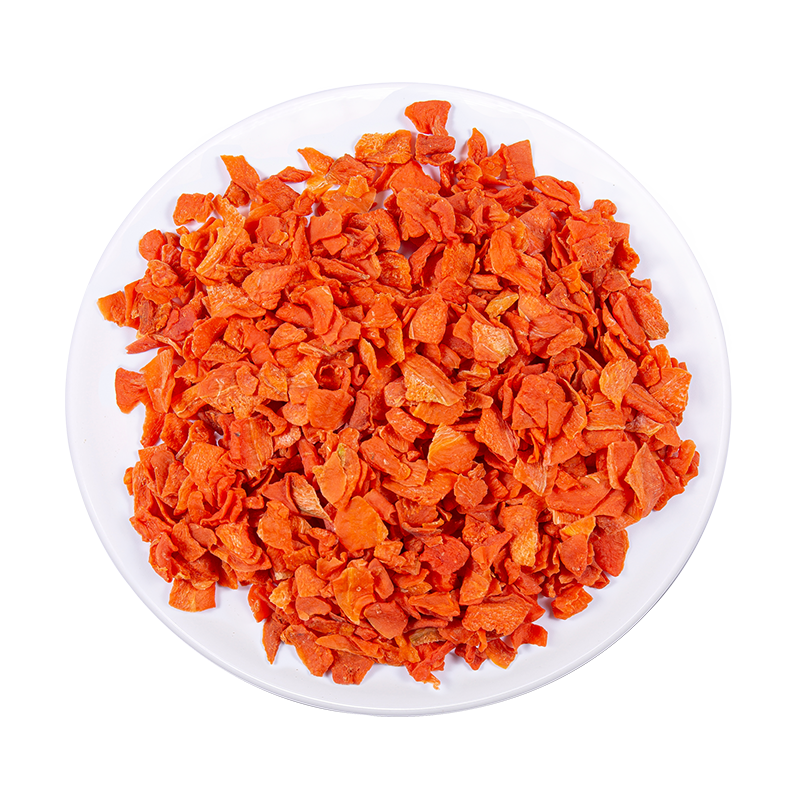
Because freeze-dried carrot is highly porous, it acts like a sponge and absorbs moisture from the environment rapidly. Even short exposure to humid air can degrade texture and nutritional stability. In contrast, dehydrated carrot, including forms like dried carrot flakes and dehydrated carrot flakes, is slightly more structurally compact, making it marginally less vulnerable to immediate moisture absorption.
However, both products require airtight packaging with moisture barriers such as vacuum sealing or nitrogen flushing to ensure long-term preservation.
Ideal Storage Conditions and Environmental Requirements
Temperature Control
Both products should be stored in a cool environment. The recommended temperature range is 10°C to 25°C. Freeze-dried carrot benefits more from lower temperatures because heat can accelerate oxidation of nutrients.
Humidity Levels
Relative humidity should be kept below 60% for dehydrated carrot and below 50% for freeze-dried carrot. High humidity leads to clumping, discoloration, and microbial risks in dehydrated forms, while freeze-dried products may quickly lose structural integrity.
Light Exposure
Both storage types require protection from direct sunlight. UV exposure can degrade carotenoids in carrots, reducing nutritional value and causing color fading in dried carrot flakes.
Packaging Methods and Shelf Life Optimization
Packaging plays a decisive role in extending shelf life. Freeze-dried carrot is typically packaged in multilayer foil pouches with oxygen absorbers. This ensures extremely low oxygen exposure, allowing shelf life to extend beyond two decades.
Dehydrated carrot, including dehydrated carrot flakes, is often stored in sealed polyethylene bags or vacuum-sealed containers. When combined with oxygen absorbers, its shelf life can be extended significantly, though it rarely matches freeze-dried longevity.
| Feature | Dehydrated Carrot | Freeze-Dried Carrot |
|---|---|---|
| Moisture Level | 5–10% | 1–3% |
| Shelf Life | 1–5 years | 20–25 years |
| Humidity Sensitivity | Moderate | Very High |
| Packaging Requirement | Vacuum or sealed bags | Airtight foil + oxygen absorbers |
Risks of Improper Storage and Quality Degradation
Improper storage conditions can significantly reduce the quality of both products. For Dehydrated Carrot, exposure to moisture may lead to mold growth, clumping, or texture hardening. Nutrient loss, particularly in beta-carotene, can reach up to 30–40% within a year if stored in unstable environments.
Freeze-dried carrot, on the other hand, is more likely to suffer from rapid rehydration or oxidation when packaging integrity is compromised. Once exposed to air, it can absorb moisture within minutes, causing structural collapse and flavor degradation.
Products such as dried carrot flakes are particularly sensitive to humidity fluctuations because of their large surface area, making controlled storage environments essential.
Practical Storage Recommendations for Consumers
For household storage, it is recommended to keep both forms in sealed glass jars or vacuum-sealed pouches stored in dark, dry cupboards. Adding desiccant packets can significantly improve stability for dehydrated carrot.
- Store below 25°C in a stable environment
- Avoid frequent opening of storage containers
- Use oxygen absorbers for long-term freeze-dried storage
- Keep away from light and humidity sources
Following these practices ensures maximum retention of flavor, nutrition, and texture for both dehydrated and freeze-dried carrot products, including variants such as dehydrated carrot flakes.